AI Guardrails Expose Hidden Supply Chain Vendor Threats
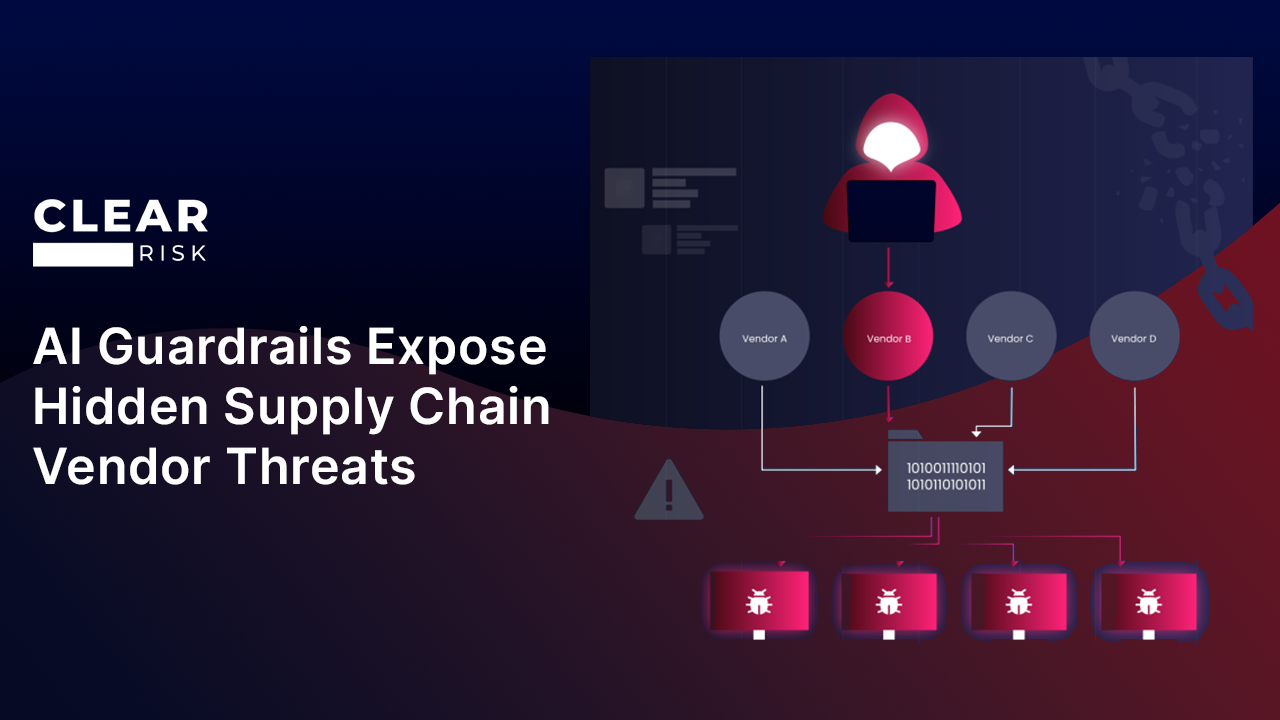
Supply chain risk management can no longer be a box to check. In 2025, most companies feel out of control: fewer than 8% say they fully manage supply chain risk, while 63% report larger-than-expected losses. Attacks through supply chains jumped dramatically between 2021 and 2023. That mix of facts means leaders need smarter ways to spot vendor weaknesses, stop damage soon after it starts, and show boards clear evidence that action is happening.
The 2025 threat picture: what keeps boards awake
Boards see the world as linked. A political move, a sanction, or a breach at a tiny supplier can ripple across factories, distribution centers, and cloud services. Attackers hunt for the smallest crack in a vendor. When one supplier stumbles, many customers feel the hit fast. Speak about third-party risk assessment in terms of money at stake and time lost. That turns a technical issue into a board-level business question.
Why most programs miss the mark
Many teams still run one-off checks and long questionnaires that take months to complete. That approach misses fourth- and fifth-tier suppliers and changes that happen overnight. Vendor risk management groups are often short-staffed, so problems sit and grow. Static checks catch yesterday’s problems, not the ones that matter right now. The fix is not more forms; it is continuous, focused attention where it is needed most.
What AI actually does in plain words
AI supply chain monitoring watches signals that point to trouble. It looks for odd behaviour, links vendors to risky suppliers, and scores who matter most. That helps teams spend time on real issues, not noise. When auditors or insurers ask for records, AI systems can pull the evidence quickly. AI is not magic; it is a way to surface the right things faster, so people can act.
A simple 6-step plan you can start this week
- Align the board and legal team on acceptable vendor risk and reporting cadence.
- Discover and map every vendor, including small and indirect suppliers.
- Turn on continuous feeds from procurement, cloud logs, and public breach data.
- Score vendors with AI so your team focuses on the top risks.
- Set automatic actions for clear high-risk cases, such as access restriction or proof requests.
- Review results regularly and change what does not work.
This plan is made to give you small wins fast and reasons to expand the program.
A quick look at the tech stack, without the fluff
You need a few core things. First, feeds: procurement systems, cloud logs, security tools, and public threat feeds. Second, a graph that shows who depends on whom, so you can see chains of risk. Third, models that watch for odd activity and rules that trigger actions. Finally, connect all of this to your GRC and ticketing tools so every fix is tracked and closed with a paper trail. That is supply chain risk assessment in practical terms.
Short real-world wins you can expect
Companies that moved to continuous monitoring saw fewer surprises and quicker fixes. One manufacturer cut the time to detect a supplier problem from weeks to hours after it started using vendor maps and live alerts. A bank used predictive scores to reduce expected loss for top suppliers and saw better terms from underwriters. Those are the kinds of practical wins that make an impact on the bottom line.
How to measure success : keep it simple
Track a few clear numbers: number of high-risk vendors found, mean time to detect, mean time to fix, and estimated dollars avoided. Also show expected loss trends for key supplier groups. When those numbers move the right way, you have evidence that the program works.
Rules, audits, and insurance - the practical side
Regulators and auditors want clear records: logs, actions, and proof that vendors meet controls. Make contracts require fast notice of incidents and periodic evidence of security. When you can show lower expected loss and solid controls, insurers pay attention and often offer better terms. This is about making your work visible and verifiable to outsiders.
How to run a 90-day pilot that actually succeeds
• Pick 30 to 50 critical vendors.
• Connect two to three high-value data feeds.
• Run AI scoring and set one automatic action for high-risk hits.
• Measure true problems found and how fast they were closed.
Use the pilot to prove value, secure budget, and build a repeatable process. The goal is learning fast and show concrete results.
Objections you will hear and simple replies
• “Our team knows vendors already.” Reply: People can’t watch every signal. AI helps them focus.
• “We’ll get too many false alarms.” Reply: Start small and tune the models. You will not flip a switch and drown in alerts.
• “This is too expensive.” Reply: Compare the cost to one major outage. Prevention often costs far less.
Quick plan for content and links inside your site
When you publish this post, link to a short maturity quiz, a 90-day pilot PDF, and a demo page for your AI supply chain monitoring tool. These links help convert readers into contacts and show the practical work behind the ideas.
Facts are clear: most companies do not feel in control, attacks are rising, and boards want answers. If you want to cut expected loss, find vendor weak spots quickly, and show auditors and insurers you have a clear program, take the next step and reach out to ClearRisk. Head over to the ClearRisk contact us page and start a conversation with people who focus only on making supply chains safer and easier to manage. Time matters in 2025; the teams that act now will be in a stronger position tomorrow.